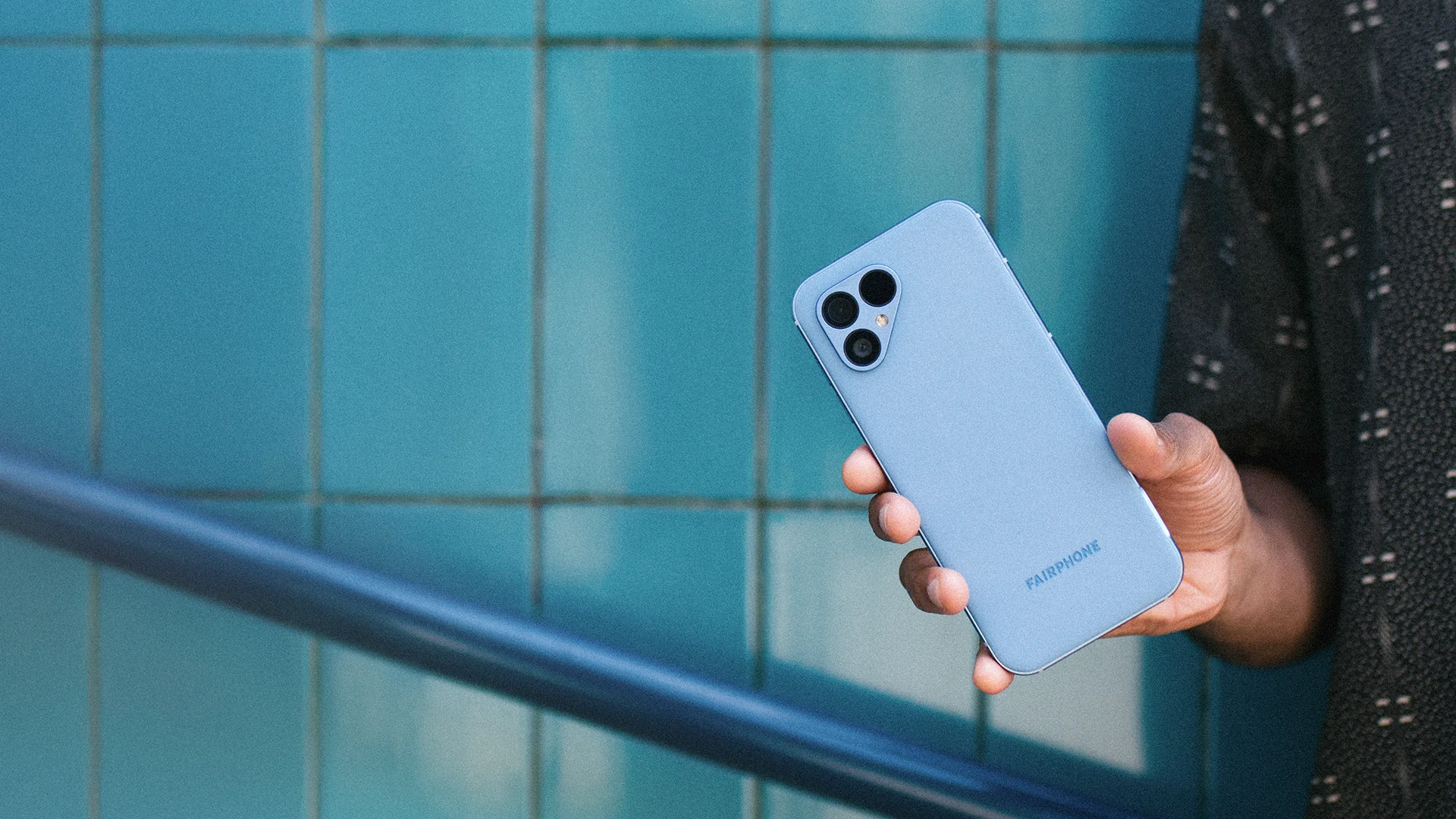
Das Fairphone (Gen. 6+)










Monique Lempers
CIOO
22 April 2026
4
min read
Share this article
"Impact is where the work begins."
In much of the tech industry, impact is still treated like a shadow. It trails the product after launch, after the supply chain is locked, after the story is already written. By then, most of the decisions that matter have already been made. At Fairphone, we work the other way around.
As Chief Impact Officer, I see every day that impact is not an afterthought or a consequence to manage. It is where the work begins. It starts with our mission and shapes the decisions that follow, from product design and sourcing to the way a device is used over time. You feel it when you repair instead of replace. You feel it when your phone stays relevant for years instead of being pushed toward obsolescence. And you see it in the way we talk about progress: clear about what we can prove today, honest about what still needs work, and open about where we need to go next.
In 2026, that approach matters more than ever. Europe’s ecodesign and due diligence rules are raising the floor, while climate pressure and geopolitical strain are exposing just how fragile global supply chains have become. But compliance is only the starting line. The point is not to do the minimum required. The point is to raise the bar, prove it can be done, and make it impossible for the rest of the industry to keep pretending change is unrealistic.
Longevity is not a nice extra. It is one of the most practical climate strategies this industry has.
Growth that drives change
In 2025, we showed that fairness and commercial performance are not opposing forces. They reinforce each other. We delivered our strongest sales performance to date and expanded across Europe. The Fairphone (Gen. 6) proved that sustainability can be a competitive edge, pairing a 10/10 iFixit score with over 50% fairly sourced materials. For too long, fair was treated as a synonym for compromise. Repairable had to mean fragile. "Ethical" had to mean expensive. "Sustainable" had to mean second best. This device broke that logic.
With 78% of early adopters being first-time buyers, the message is clear. People are ready to switch when the better choice truly delivers. Our B2B segment also accelerated as enterprises and public institutions looked for credible ways to turn ESG commitments into action. And growth matters. Because when we scale, the standards we push travel further through supply chains that would stay exactly as they are otherwise.
Delivering real-world impact
Our growth in 2025 was matched by measurable environmental progress. We reduced the product carbon footprint from 42 kg CO₂e for the Fairphone 5 to 29 kg CO₂e for the Fairphone (Gen. 6), driven by increased recycled content, lighter design, and deeper supplier engagement. Today, 28% of electricity used in our component manufacturing comes from renewable sources.
At the same time, transparency matters. We did not achieve our full absolute emissions reduction target. We reached 7.3% against a goal of 12%. That is not a detail to smooth over. It is a reminder that progress is not linear and that growth, supply chain reality, and climate ambition can pull hard against each other. Even so, we are seeing the impact of our efforts where it counts most: slashing the carbon intensity of our phone by 18% over the last three years.
How long a phone stays in use matters as much as how it is produced. Through repairability, long-term software support, and modular design, our devices stay in use longer, lowering emissions per year of use and reducing the need for new production. Longevity is not a nice extra. It is one of the most practical climate strategies this industry has.
Beyond climate, we expanded our work on 23 focus materials, strengthened our nature approach, and continued investing in fairer supply chains through mineral credits, living wage bonuses, worker voice mechanisms, and chemical safety. People should not have to trade their health for a paycheck, and communities should not have to absorb the hidden cost of the world’s electronics.
The question is no longer whether fairer electronics can exist. We have shown they can succeed in the market while delivering real impact. The real question is whether the rest of the industry is prepared to follow. And as we scale, so does the standard.
READ OUR LATEST IMPACT REPORT
Latest stories

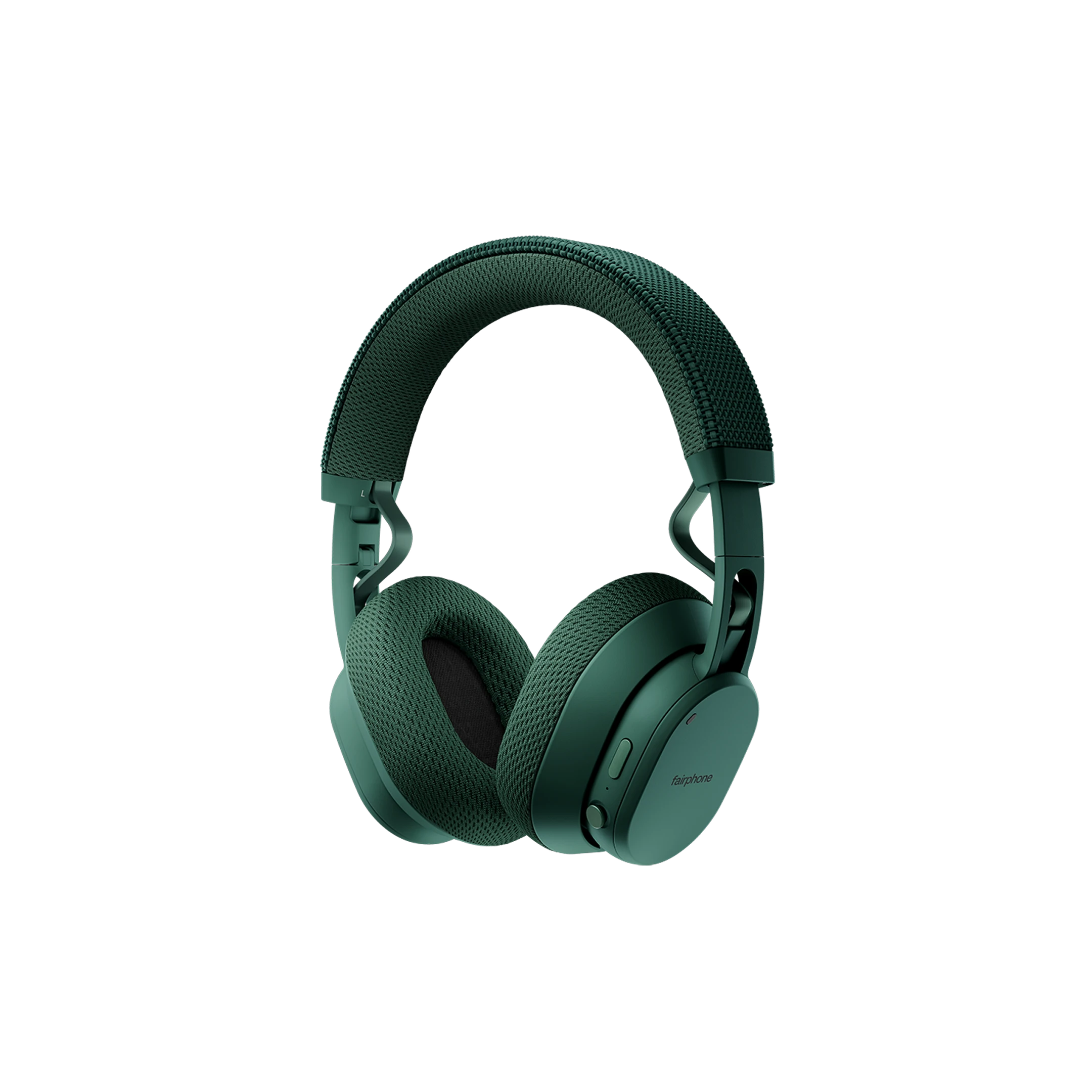
The new Fairbuds 2. Your sound. Made better.
Great sound, a distinct design, and a listening experience made to evolve with you. Designed to impress from day one
Read more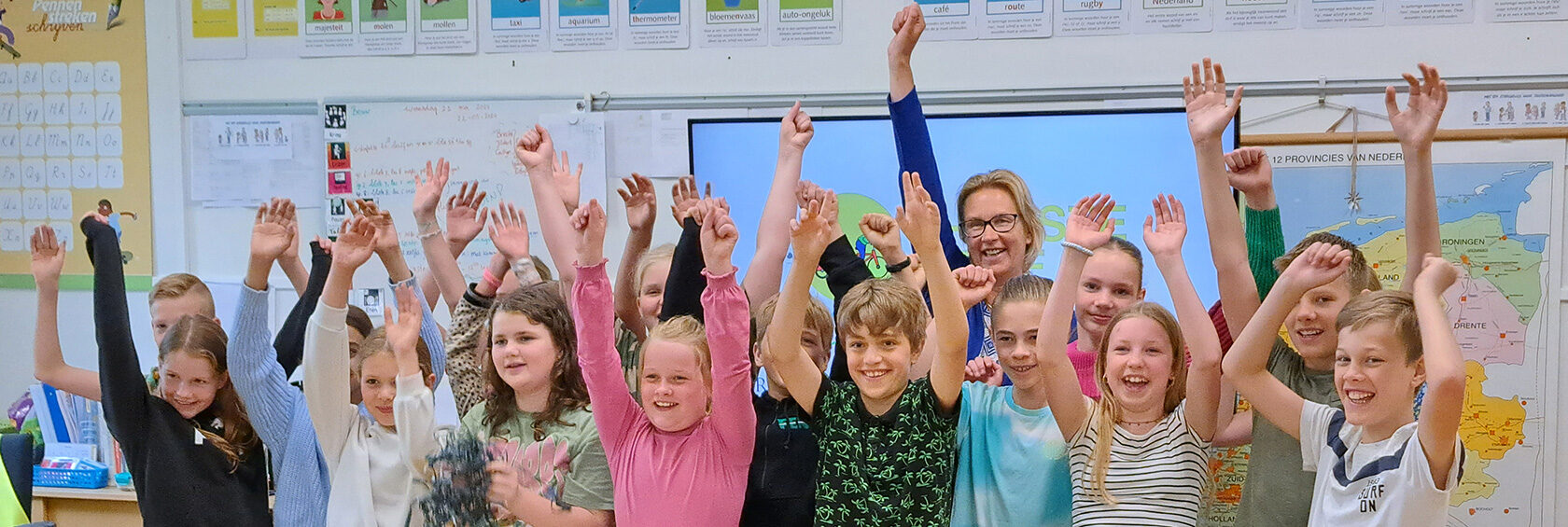
Can we outrace the e-waste problem? Yes, we can.
Increasing electronic waste is a global crisis that's growing exponentially. E-waste races are an innovative way to tackle the problem.
Read more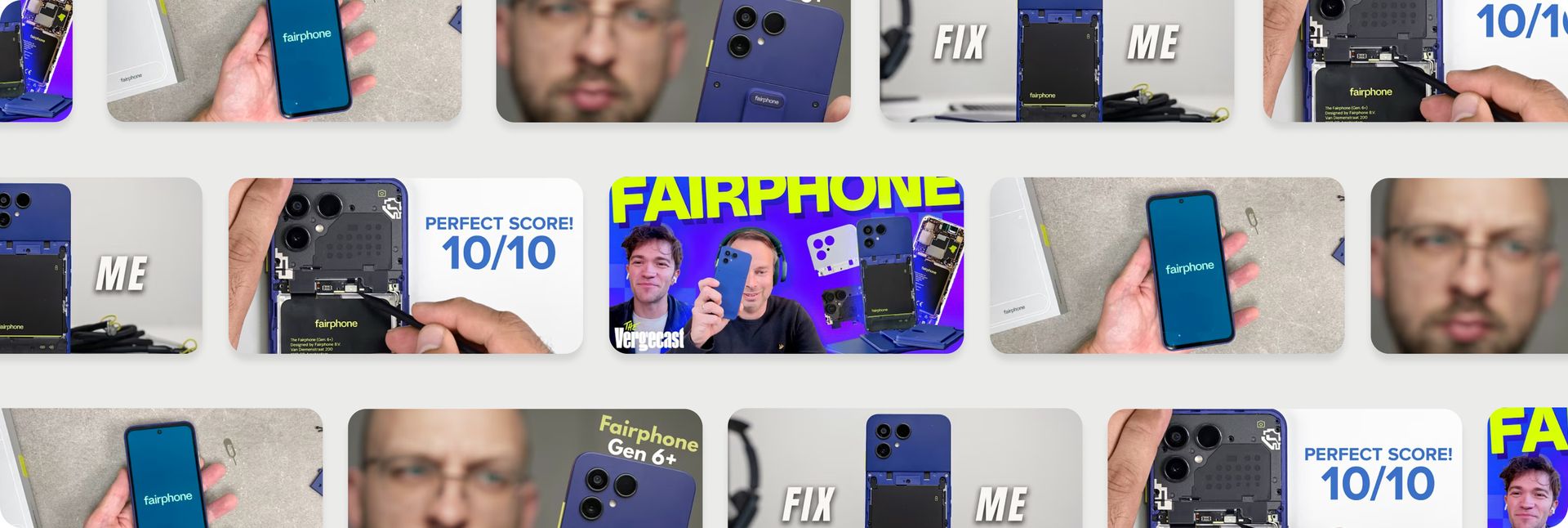
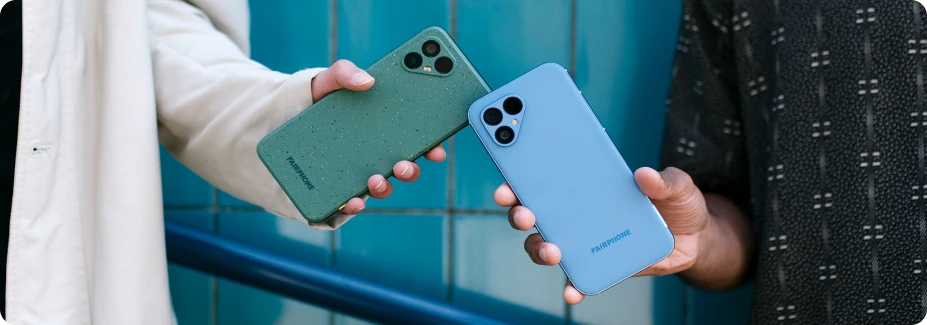
The Fairphone (Gen. 6+): Loved by critics. Plus more.
A month in, and the conversation around the Fairphone (Gen. 6+) is only getting louder. When we set out to
Read more